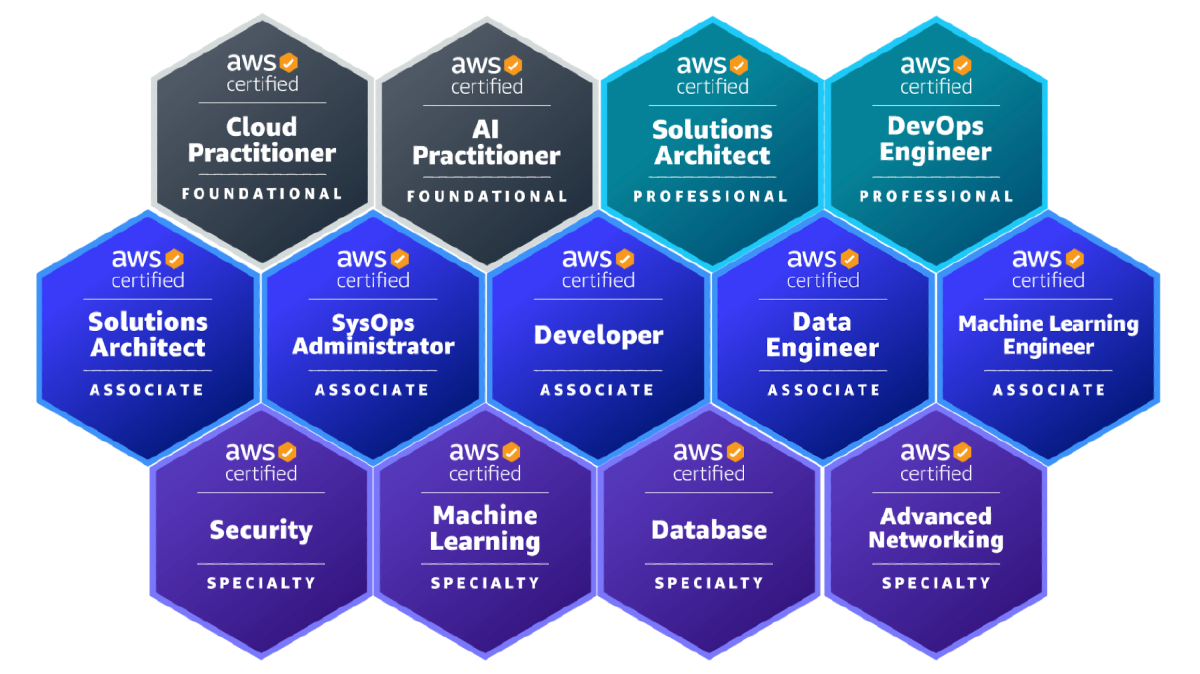

I am very excited and thrilled to have completed all active AWS certifications and become eligible to receive the AWS Certified Gold Jacket 🧥. While owning the gold jacket was a good motivator to finish all the certifications, the real driving force was a quest for knowledge and skills. This journey began in 2021; at the time, I thought it would be a sprint, that I could finish all the certifications within the same year, but it turned out to be an ultramarathon. In this post, I reflect on two important aspects of achieving this goal: the “Why” and the “How.” So, why?
Learning and being curious to earn trust#
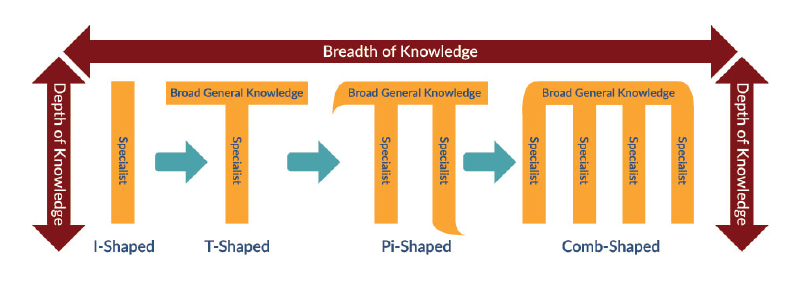
From my experience as an IT professional in advisory roles such as consultancy, architecture, or technology leadership roles like CTO and Tech Lead, I have found that being multi-skilled and possessing both technology breadth and depth are crucial. These skills enable me to make informed decisions, provide strategic advice, and earn the trust of customers. Coming from an application development background, my primary goal in pursuing all AWS certifications was to expand my comb-shaped skills (Figure 1) beyond application architecture, software development, and DevOps. I aimed to cover additional areas such as solution architecture, security, networking, machine learning, and analytics.
Practice regular learning and stepping out of comfort zones#
Learning, like many other activities, requires regular practice to become a habit. Engaging regularly in explicit learning activities makes it easier to learn at will. For example, the first AWS certification I pursued was the Solutions Architect Associate in March 2021, which was almost six years after my last certification in 2014 (TOGAF 9). Returning to certification initially was hard and felt like a chore, but after completing the first, second, and third certifications, the process became easier and more enjoyable. I felt prepared, organized, and ready to start on the next certification. A significant part of this success involved stepping outside my comfort zone, spending some evenings and weekends studying, and training myself to regularly engage in learning activities.
Exercise lean time management and prioritization#
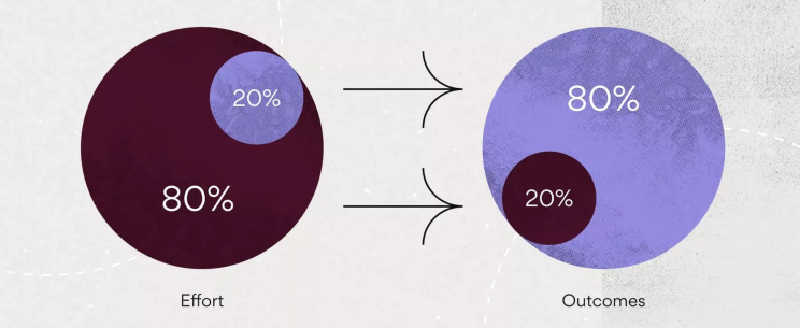
The combined duration of the certification exams is more than 26 hours, and the study time is over ten times that. Setting aside time for study and exams required efficient time management. I learned to allocate my time where it adds the most value, whether for study or other activities. By following the Pareto principle, also known as the 80/20 rule (Figure 2), I can prioritize the 20% of tasks that achieve 80% of the outcomes. To ensure my activities or tasks add value, I also always ask myself these questions before embarking on any task:
- Am I uniquely suited to do this?
- Does this give me energy?
- Do I have the time to do it right?
How did I go about it?#
Below is an extract from my article reflecting on 2023, A Year of Reading and Learning:
I have always loved certifications; you learn and get rewarded for this learning with a certificate. Based on my experience with some of the AWS certifications during 2021/22, I discovered the following about my learning habits:
- I’m deadline-driven. Having a cutoff date gives me a clear timeline to learn and imposes some desirable pressure. Without a deadline or pressure, other commitments tend to take over.
- I prefer a condensed learning style. Ideally, this spans 4 to 6 weeks, but not more than that to ensure the information stays fresh in my mind. Longer periods of study mean I have to repeat the content to refresh my memory, doubling the effort.
- I prefer reading over watching videos. I go through the training course slides and only watch videos for topics I’m not familiar with. As mentioned, finding time to sit and watch videos or read slides can be challenging. If the topic allows, I listen to the video while doing physical activities instead of watching it.
My approach to certifications involves looking at my calendar, choosing a date for the exam (anywhere from 1 to 6 weeks ahead), and booking the exam. The rest will sort itself out.
In terms of certification order, my initial plan was to complete them all in one year. However, after some consideration, I decided to spread them out, averaging three certifications per year. This approach helped me make learning a consistent habit and allowed enough time for hands-on practice and experience related to each certification. Coming from development and architecture backgrounds, I started with the architecture, developer, and DevOps-related certifications, then moved on to the others. Below is the schedule I followed.
2021
3 certifications
- AWS Certified Solutions Architect – Associate
- AWS Certified Cloud Practitioner
- AWS Certified Developer – Associate
2022
3 + CKAD
- AWS Certified SysOps Administrator – Associate
- AWS Certified Solutions Architect – Professional
- AWS Certified DevOps Engineer – Professional
2023
3 certifications
- AWS Certified Security – Specialty
- AWS Certified Machine Learning – Specialty
- AWS Certified Database – Specialty
2024
2 certifications
- AWS Certified Advanced Networking – Specialty
- AWS Certified Data Engineer – Associate
2025
2 certifications
- AWS Certified Machine Learning Engineer – Associate
- AWS Certified AI Practitioner
Summary#
Embarking on all of the AWS certifications was a significant goal and commitment for me. What helped me stay motivated was the Why: I needed strong reasons for investing the time and energy. I can summarize these reasons as follows:
- Learning and being curious to earn trust
- Practicing regular learning and stepping out of comfort zones
- Exercising lean time management and prioritization
For the How, as I began pursuing the certifications, I discovered a recipe that worked for me based on my most effective learning methods:
- I am driven by deadlines
- I prefer a condensed learning style
- I prefer reading over watching videos
To summarize, for me, it was an ultramarathon rather than a sprint, and I enjoyed the journey as much as the destination 🧥.